Selecting the correct lighting fixture requires precise mathematical scaling based on room dimensions, table size, and vertical clearance. Homeowners seeking documented classic interior design portfolio fit often look to Modenese Interiors for inspiration, but calculating exact fixture proportions remains a strict architectural science. Proper sizing prevents the lighting element from overwhelming the dining table or disappearing into the overhead space.
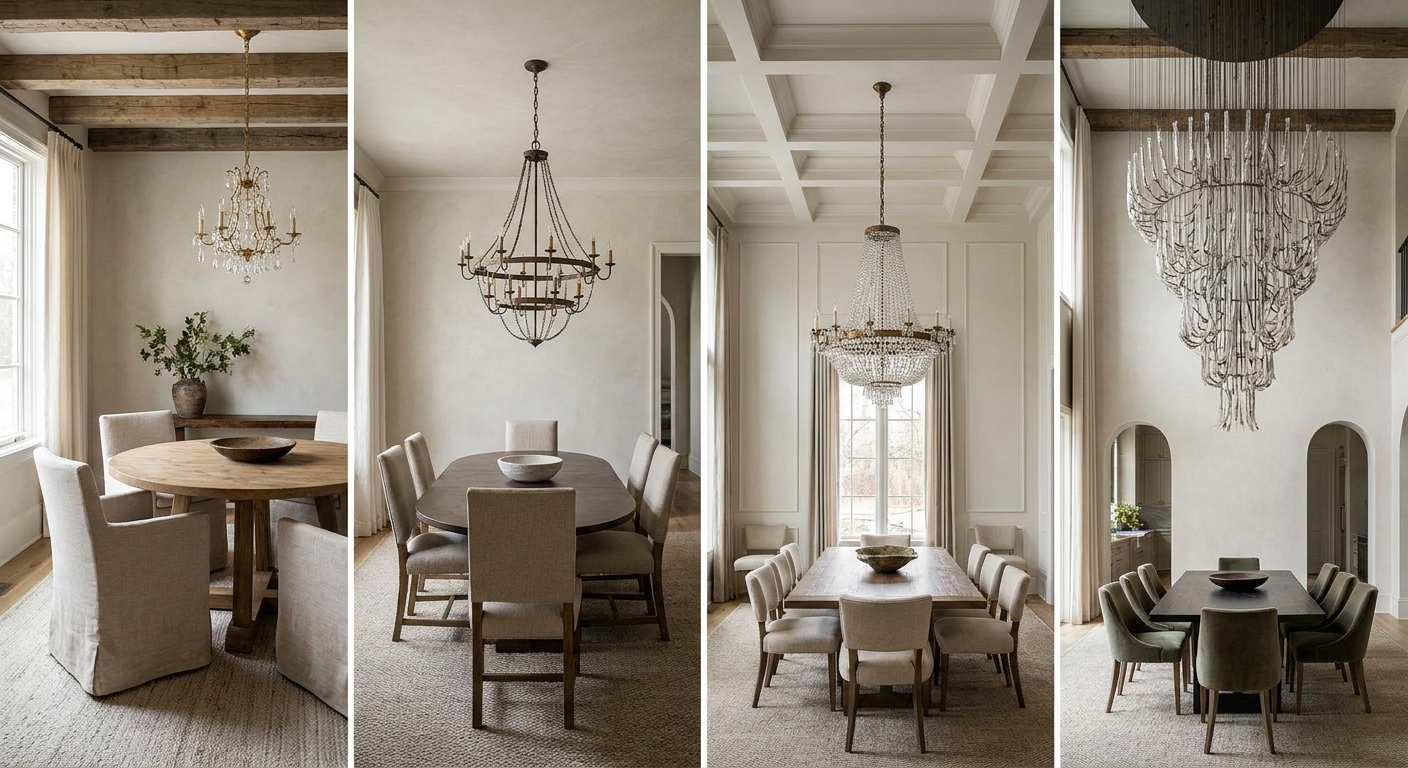
Understanding the standard sizing formula for dining spaces
Designers determine the baseline diameter of a dining room chandelier by adding the room length and width in feet, then converting that exact numerical sum directly into inches to establish the optimal fixture width for standard eight-foot ceiling conditions before applying any table-specific clearance deductions.
A room measuring fourteen feet by sixteen feet requires a thirty-inch diameter chandelier under standard eight-foot ceiling conditions. The American Lighting Association recommends sizing a chandelier exactly twelve inches narrower than the smallest width of the dining table. A table measuring forty-eight inches wide requires a fixture no larger than thirty-six inches in diameter to prevent guests from bumping their heads when standing. Federal housing standards under Title 24, Section 3280.104 of the Code of Federal Regulations dictate that habitable rooms must maintain a minimum seven-foot ceiling height, establishing the absolute minimum baseline for residential suspended lighting calculations.

| Room Dimensions (Feet) | Calculated Sum | Recommended Chandelier Diameter (Inches) |
|---|---|---|
| 10 x 12 | 22 | 22 inches |
| 12 x 14 | 26 | 26 inches |
| 14 x 16 | 30 | 30 inches |
Adjusting chandelier diameter for high and sloped ceilings
Rooms featuring architectural ceilings taller than the standard eight-foot baseline require homeowners to increase the calculated chandelier diameter by two to three inches per additional foot of vertical space to prevent the lighting element from appearing visually insignificant within the expanded overhead air volume.
Sloped ceilings demand fixtures with wider diameters and heavier materials to anchor the dining space. Installers must calculate the average ceiling height across the slope to determine the correct diameter adjustment.
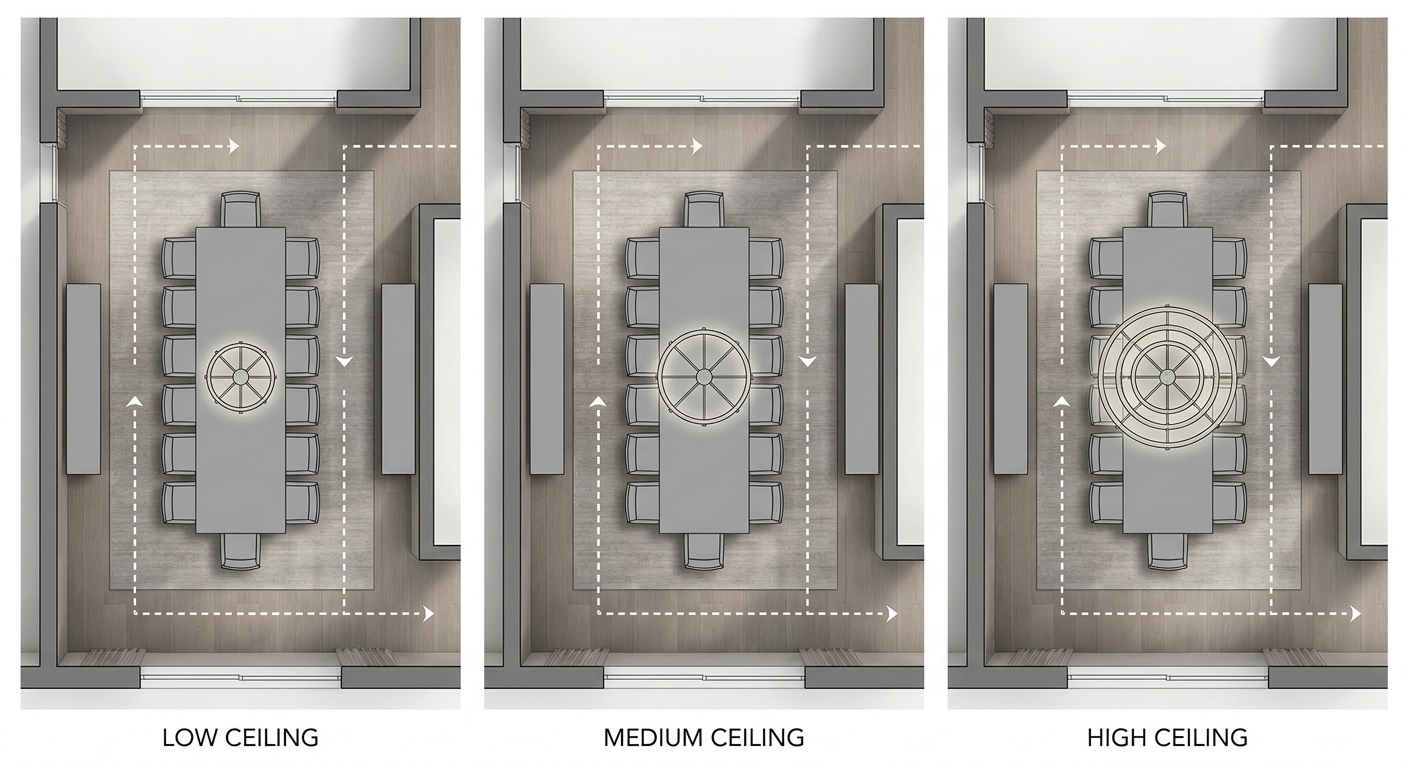
- Eight-foot ceilings: Use the baseline diameter calculation without adjustments.
- Nine-foot ceilings: Add two to three inches to the baseline diameter.
- Ten-foot ceilings: Add four to six inches to the baseline diameter.
According to the Minnesota Department of Labor and Industry Rule 1309.0305, rooms with sloped ceilings must maintain a ceiling height of at least seven feet over fifty percent of the required floor area, and no portion of the required floor area may have a ceiling height of less than five feet. Designers must center the expanded chandelier diameter within the tallest portion of the ceiling vault to maximize visual impact while complying with state building code height mandates.
Material weight and visual scale considerations
The physical composition of the lighting fixture alters how the human eye perceives the diameter. A solid brass fixture appears visually heavier than an open-wire frame of the exact same measurements. Historical precedents demonstrate how material choices dictate scale in high-ceiling environments. The Hezilo chandelier, an eleventh-century Romanesque wheel fixture installed in the Hildesheim Cathedral in 1061, measures exactly six meters in diameter and incorporates gilt copper to fill the massive architectural void created by the vaulted ceilings. Modern dining rooms require similar material scaling. Classic glass and crystal chandeliers feature arrays of hanging prisms that refract light, making the fixture appear wider than the actual physical frame.
Hanging height rules for optimal illumination
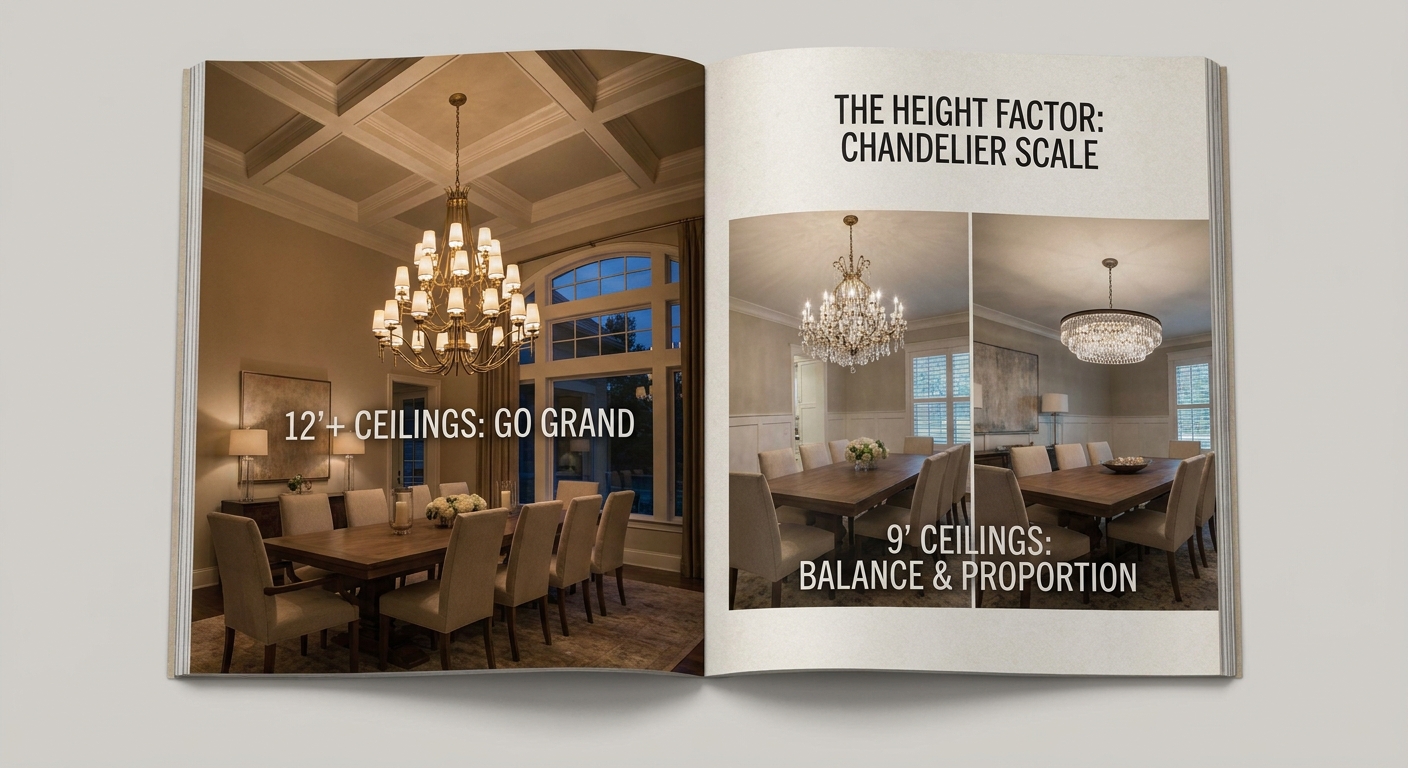
Installers must suspend dining room chandeliers so the lowest point of the fixture rests exactly thirty to thirty-six inches above the tabletop in rooms with standard eight-foot ceilings, while adding three inches of suspension height for every additional foot of vertical clearance to maintain proper illumination angles.
Maintaining proper clearance ensures the light source does not block sightlines across the dining table. A homeowner installing a thirty-inch diameter crystal fixture in a room with a ten-foot ceiling must hang the chandelier thirty-six to forty-two inches above the table surface. Proper suspension heights prevent glare from striking seated guests directly in the eyes while providing sufficient ambient light for dining activities. The United States Department of Energy recommends selecting energy-efficient lighting choices that provide 3,000 to 4,000 lumens for a standard two-hundred-square-foot dining room, as wider chandeliers hung at higher elevations require stronger bulb outputs to illuminate the dining surface effectively.
Related reading on this site
Readers comparing planning rules can also review Dubai Luxury Restaurant Interior Design 2025: Premium Fine Dining Experience Spaces by Elite Hospitality Design Specialists for High-End Culinary Establishments and Exclusive Gastronomic Venues for adjacent context on the same site.
Material and proportion decisions connect closely with Dubai Restaurant Interior Design 2025: Creating Memorable Dining Experiences Through Luxury Hospitality Design, which gives readers another local reference point.
Project research can continue with Restaurant Interior Design Company: Creating Exceptional Dining Experiences when the next question concerns a neighboring design topic.