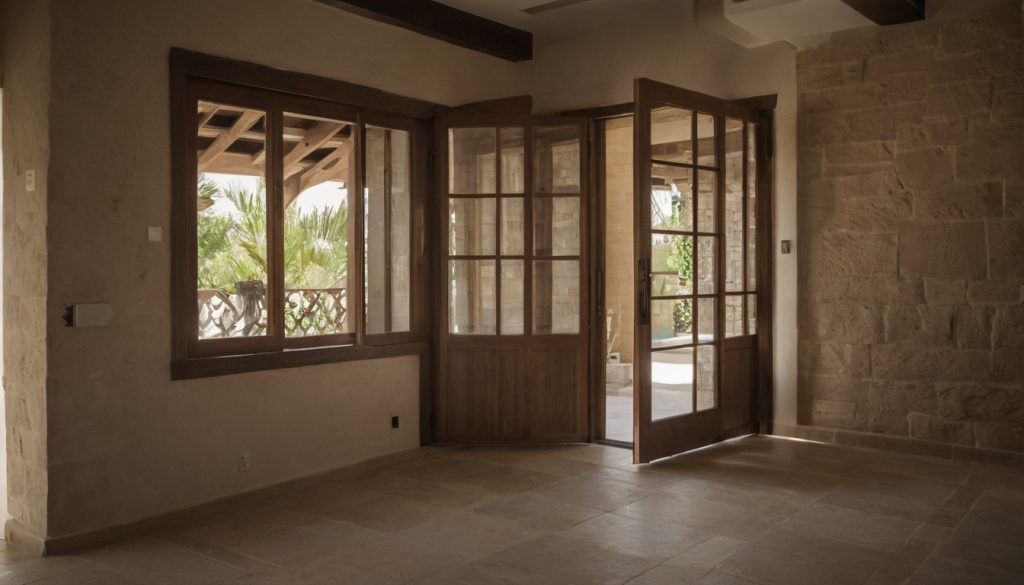
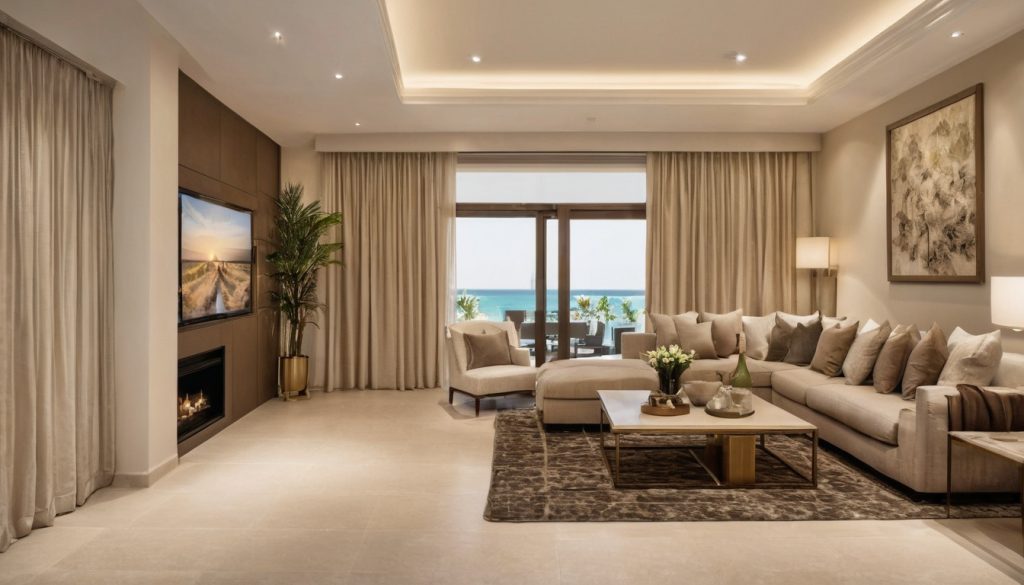
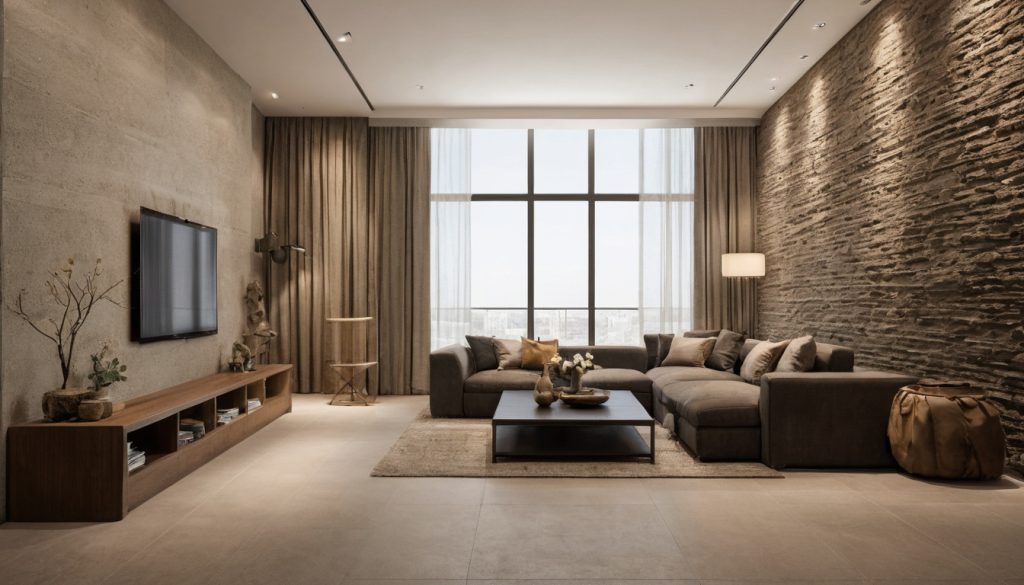
A Dubai villa owner should appoint an interior design company when design is still unresolved, a fit-out contractor when the tender pack is complete, and a design-build team when one party must carry design, execution, and warranty responsibility. The real decision is not style versus construction. The real decision is who owns unresolved scope before money is committed.
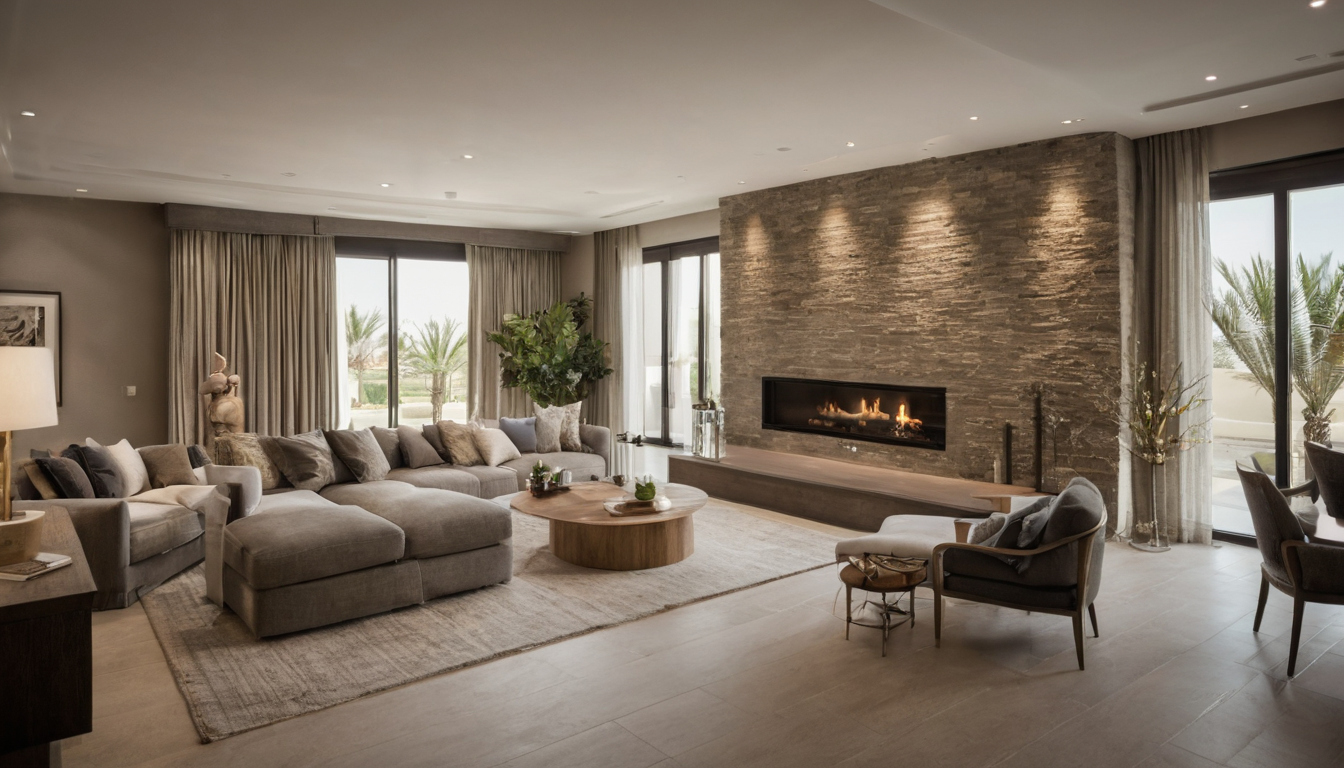
Interior Design Company or Fit-Out Contractor in Dubai: Who Should Hold Your Villa Scope shown with finish, fixture, and clearance relationships visible.
Should a Dubai villa homeowner appoint an interior design company, a fit-out contractor, or a design-build team?
For a Dubai villa renovation, the safest appointment depends on how much design is unresolved before pricing. If layouts, finishes, MEP routes, ceilings, bathrooms, joinery, or procurement are still moving, the homeowner should not treat the contractor’s price as final.
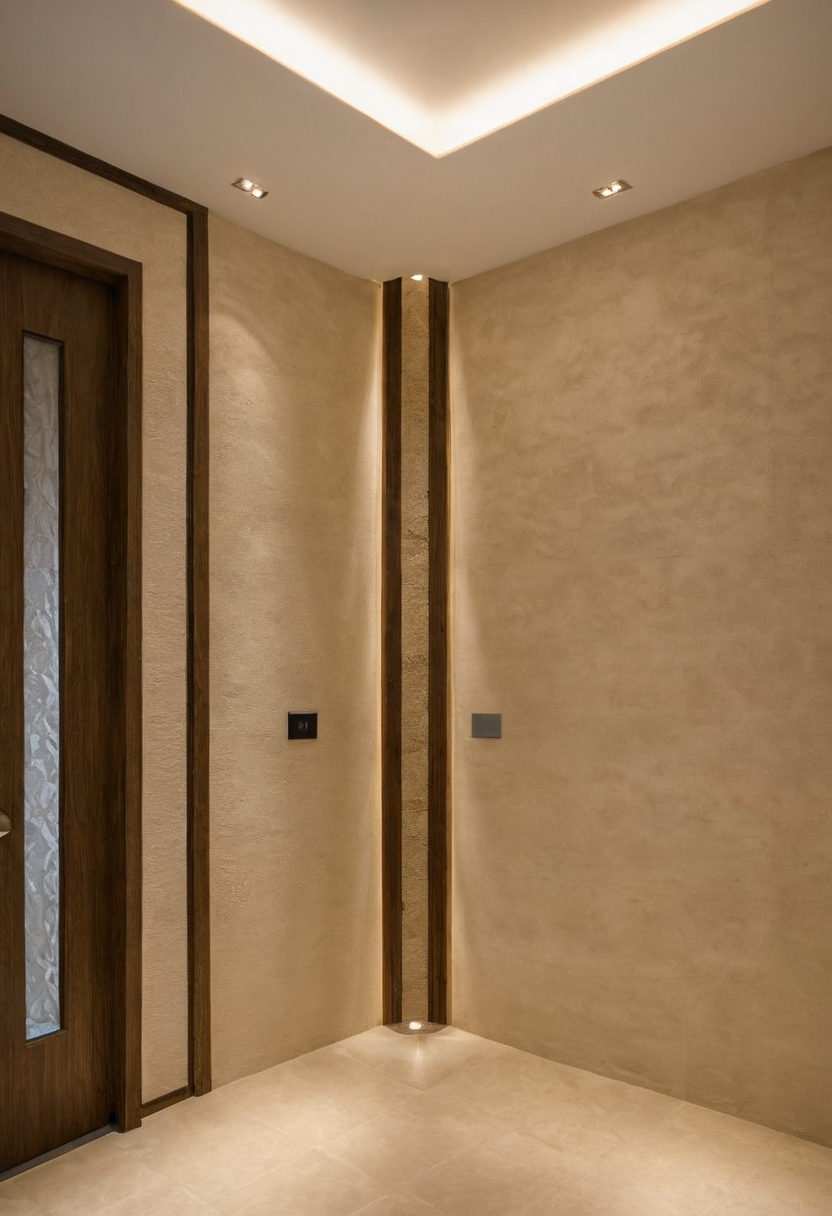
Should a Dubai villa homeowner appoint an interior design company, a fit-out contractor, or a design-build team shown with finish, fixture, and clearance relationships visible.
An interior design company should hold the Dubai villa scope when design decisions still affect price
- Use this route for unresolved design. A villa owner changing staircase cladding, kitchen layout, wardrobes, lighting mood, bathroom finishes, or majlis ceiling design is still shaping cost, not just style.
- Expected role. The interior design company should control concept design, layout drawings, finish schedules, lighting intent, joinery direction, sample approvals, and client sign-offs before contractors price the work.
- Main risk. If a contractor prices while finishes, sanitaryware, stone sizes, or joinery details remain vague, the low quote can become a variation machine after demolition starts.
A fit-out contractor should hold the Dubai villa scope only when the tender pack is complete
- Use this route for execution, not discovery. Contractor-led delivery works for a cosmetic upgrade, repainting, flooring replacement, loose furniture installation, or a defined fit-out package with no major design development.
- Minimum tender pack. The villa package should include plans, reflected ceiling plans, lighting layouts, MEP points, joinery drawings, material schedules, sanitary schedules, door schedules, BOQ, exclusions, and authority or community requirements.
- Main risk. A contractor should not be expected to absorb missing design, hidden MEP relocation, structural changes, façade changes, or extension scope inside a lump-sum price.
A design-build team should hold the Dubai villa scope when the homeowner wants one accountable party
- Use this route for coordination control. Design-build can suit a full interior refurbishment where layout, MEP, joinery, procurement, site supervision, and warranty need one chain of responsibility.
- Key control. The homeowner should require milestone approvals, clear specifications, open-book procurement where appropriate, variation rules, and independent snagging for complex villa work.
- Main risk. Single-point responsibility can reduce blame-shifting, but it can also reduce independent design review and competitive tender transparency.
Where a villa falls under an authority framework, the decision becomes more serious than a preference for one company type. Dubai Development Authority states that it was established under Law No. 1 of 2000, so the scope holder must understand which authority or community rules apply. The appointment choice is only safe when the next document names one owner for every design, approval, procurement, site, snagging, and warranty task.
A Dubai villa scope should name one owner for every design, approval, procurement, and warranty task
A Dubai villa renovation becomes risky when concept design, authority drawings, MEP coordination, joinery detailing, procurement, supervision, snagging, and warranty sit between different parties. The contract should assign one responsible owner for each task before the homeowner accepts a price.
The villa concept design owner should control layouts, mood direction, materials, and client sign-offs
The concept design owner should not only choose a look. The concept design owner should freeze furniture layouts, wall changes, mood direction, key finishes, sanitary selections, lighting intent, kitchen brief, wardrobes, loose furniture allowances, and client approval milestones.
- Layouts: one party confirms room functions, circulation, built-in furniture depths, door swings, and whether any partition or opening change needs technical review.
- Materials: one party records stone type, tile size, timber finish, paint system, metal finish, glass treatment, and approved alternatives before the contractor prices the work.
- Client sign-offs: one party controls written approvals for concept, developed design, material boards, sample mock-ups, and procurement release.
- Budget effect: one party warns the homeowner when a design choice affects AC routes, ceiling drops, lighting loads, lead times, or specialist installation.
A common Dubai villa gap is a mood board with no decision on slab size, stone thickness, skirting profile, or grout colour. The contractor then prices a broad allowance, and the homeowner later discovers that the preferred finish sits outside the quotation.
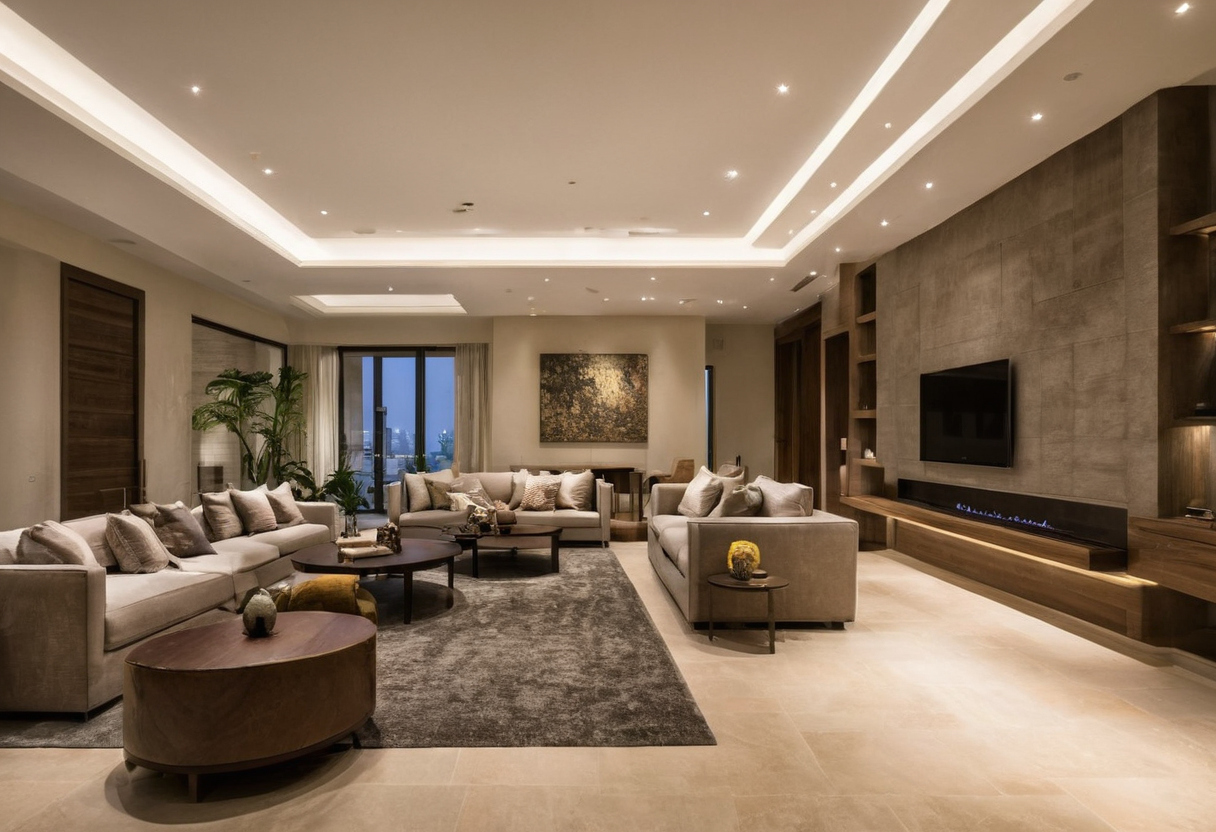
A Dubai villa scope should name one owner for every design, approval, procurement, and warranty task shown as an editorial reference for proportion and finish coordination.
The villa technical scope owner should coordinate MEP, lighting, joinery, ceilings, and authority drawings
The technical scope owner converts design intent into buildable information. This owner should coordinate reflected ceiling plans, lighting layouts, switching, AC diffusers, access panels, detector positions where relevant, joinery sections, wet-area details, MEP points, door schedules, and authority or community drawing packages.
For projects within Dubai Development Authority jurisdiction, Dubai Development Authority Planning and Development services regulate master planning and construction activities. DDA services include reviews, permits, and inspections intended to align projects with applicable codes, guidelines, regulations, and best practices. Where DDA construction services apply, the process can also cover permitting construction activities, inspections, and completion certificates.
Ceiling coordination is where many villa budgets move. A chandelier selected after the ceiling is framed can force a new support detail, revised lighting circuit, different dimming control, or changed gypsum profile. Even ceiling height and chandelier sizing decisions can affect ceiling design, lighting specification, procurement, and installation sequencing.
Lighting also needs a named specifier. For applicable qualified LED products, ENERGY STAR states that LED lighting uses at least 75 percent less energy and lasts up to 25 times longer than incandescent lighting. The villa scope still has to name who selects fixture type, colour temperature, driver location, dimmer compatibility, and replacement access.
The villa handover owner should manage snagging, defects, manuals, and warranty follow-up
The handover owner should be visible before site work starts. This owner should manage snagging lists, defect closure, testing records, product manuals, paint touch-up references, appliance documents, lighting schedules, stone care instructions, joinery hardware details, and warranty response routes.
- Snagging: check paint finish, mitres, door alignment, cabinet gaps, silicone lines, tile lippage, stone stains, light operation, AC performance, water pressure, drainage, and access panels.
- Defects: record each issue with location, photo, responsible trade, target closure date, and retest requirement.
- Maintenance: assign care instructions to materials. The Natural Stone Institute warns that scouring powders or abrasive creams can scratch natural stone surfaces, so a villa with marble floors or counters needs clear cleaning guidance at handover.
- Warranty: name the party who receives defect notices, contacts subcontractors, approves access, and confirms closure after move-in.
The practical test is simple: if a task can affect price, approval, programme, maintenance, or warranty, the Dubai villa scope needs one named owner for that task. The next risk is whether that named owner is legally and technically able to handle the approvals attached to the work.
Dubai villa approvals and licensing can decide who is legally able to hold parts of the scope
For villas in Dubai, the correct scope holder must be able to manage authority submissions, community NOCs, contractor permits, and licensed trade work where required, especially for structural changes, façade alterations, MEP relocation, wet-area changes, and master-planned community rules.
Which Dubai villa works usually trigger authority or community approval?
Dubai villa approval risk starts before demolition. Dubai Municipality Building Permit Procedures cover Building Permits, Completion Certificates, and technical inspections of under-construction sites in Dubai, and the listed categories include residential villas. The same page displays a “Page last modified: 11 June 2026” note, so a homeowner should check the current procedure before issuing a programme or accepting a contractor’s approval allowance.
| Work type | Likely approval or NOC trigger | Responsible party to verify |
|---|---|---|
| Internal wall removal or new openings | Possible structural review, as-built check, community NOC, authority permit | Licensed consultant or engineer, not only the interior designer |
| Bathroom, kitchen, laundry, or pool equipment relocation | Waterproofing, drainage, electrical load, ventilation, and MEP coordination risk | MEP contractor with consultant review where the change is material |
| Façade, windows, boundary walls, pergolas, or extensions | Master developer design rules, neighbour impact, authority or community NOC | Architect, contractor, and community approvals coordinator |
| Staircase, slab penetration, roof works, or major AC change | Structural safety, fire separation, waterproofing, drainage, and inspection risk | Licensed engineering consultant and specialist trade contractor |
| Decorative finishes, loose furniture, curtains, and styling | Usually lower approval risk unless access, waste, noise, or façade rules apply | Interior designer or decorator, with community access rules checked |
Which licensed party should submit drawings and take responsibility for technical compliance?
A design company can own the design intent, but technical compliance needs the right licensed party. In Dubai communities under Dubai Development Authority jurisdiction, Dubai Development Authority design services review architectural, structural, and MEP designs and drawings against approved master plans and relevant rules, codes, and regulations. That means a mood board, furniture layout, or 3D render is not a permit-ready submission.
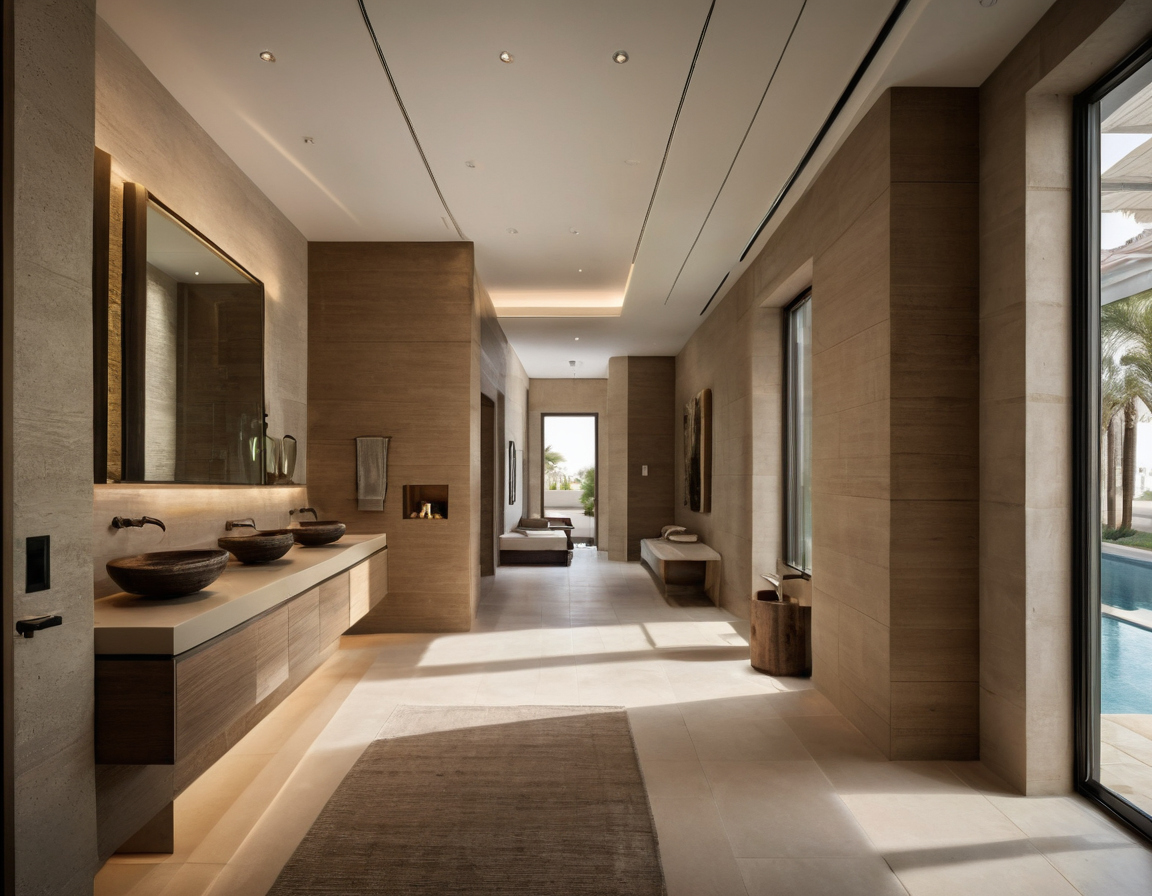
Dubai villa approvals and licensing can decide who is legally able to hold parts of the scope shown as an editorial reference for proportion and finish coordination.
The homeowner should ask for the trade licence activities before signing. Interior design consultancy, interior decoration, fit-out contracting, building contracting, MEP contracting, joinery, aluminium and glass, and swimming pool works can sit under different licensed activities. The safe appointment structure names who prepares drawings, who signs technical documents, who submits through the authority or community portal, who responds to comments, and who pays resubmission costs caused by design changes.
Submission packs commonly include title deed or tenancy authority documents, existing drawings, proposed plans, structural or MEP drawings where relevant, method statements, contractor licence documents, insurance, work programme, access forms, waste disposal plan, and neighbour or community forms. Dubai Municipality’s procedures page also notes that downloadable procedure files in PDF or office formats are subject to a less than 40 MB maximum size, a small reminder that approval work has document discipline as well as design content.
Which villa changes are red flags for appointing only a decorator or basic fit-out contractor?
Red-flag villa changes include load-bearing wall removal, column or beam cutting, slab coring, staircase redesign, bathroom relocation, kitchen exhaust rerouting, large AC duct changes, electrical load upgrades, façade replacement, pool construction, roof waterproofing, and external landscaping that affects drainage. A decorator may select finishes beautifully, but a decorator should not be the only accountable party for safety, statutory drawings, or hidden services.
The practical test is simple: if the change can affect structure, waterproofing, fire safety, electrical load, drainage, façade appearance, neighbour impact, or future resale documents, appoint a scope holder with consultant coordination and approval responsibility. Once the approval path is visible, the next cost risk sits inside the BOQ, specifications, and exclusions schedule.
Most Dubai villa variation claims start in the BOQ, specifications, and exclusions schedule
In a Dubai villa fit-out, the cheapest quotation often becomes expensive when the BOQ hides provisional sums, vague finishes, missing MEP works, undefined joinery hardware, excluded authority fees, or unclear site conditions. The homeowner should test every quote against drawings, specifications, exclusions, lead times, and change-order rules before signing.
A Dubai villa BOQ should expose provisional sums, exclusions, alternates, and client-supplied items
A villa BOQ should read like a pricing map, not a sales summary. Each line should connect to a drawing, room, quantity, unit rate, specification, and installation responsibility. If a contractor prices “bathroom renovation” as one lump line, the homeowner cannot see whether waterproofing, floor falls, sanitary installation, mirror lighting, exhaust changes, access panels, testing, and making good are included.
- Provisional sums: marble slabs, porcelain tiles, sanitaryware, decorative lighting, appliances, smart home devices, landscaping, loose furniture, and specialist metalwork should show allowances and what happens if the final selection costs more.
- Common exclusions: authority fees, community deposits, DEWA-related changes, AC balancing, appliance connection, furniture protection, waste disposal, deep cleaning, pest treatment, and night or restricted-access work should appear in one exclusions schedule.
- Alternates: imported stone, local porcelain, veneer, laminate, quartz, solid surface, and paint systems should be priced as named options so the homeowner can choose savings without redesigning the room.
- Client-supplied items: the BOQ should state who measures, orders, receives, stores, installs, tests, and warrants owner-purchased chandeliers, appliances, sanitary fittings, and loose furniture.
A like-for-like tender table should compare scope line, drawing reference, quantity, specification, allowance, exclusion, delivery lead time, warranty owner, and variation trigger. The lowest total is only useful after missing responsibilities become visible.
Villa material specifications should name brands, grades, dimensions, finishes, and approved alternatives
Villa material specifications should not rely on words such as luxury, premium, European, or high quality. A usable schedule names the material type, size, thickness where relevant, finish, edge detail, fixing method, substrate, grout or sealant colour, maintenance requirement, approved equal, and sample approval process.
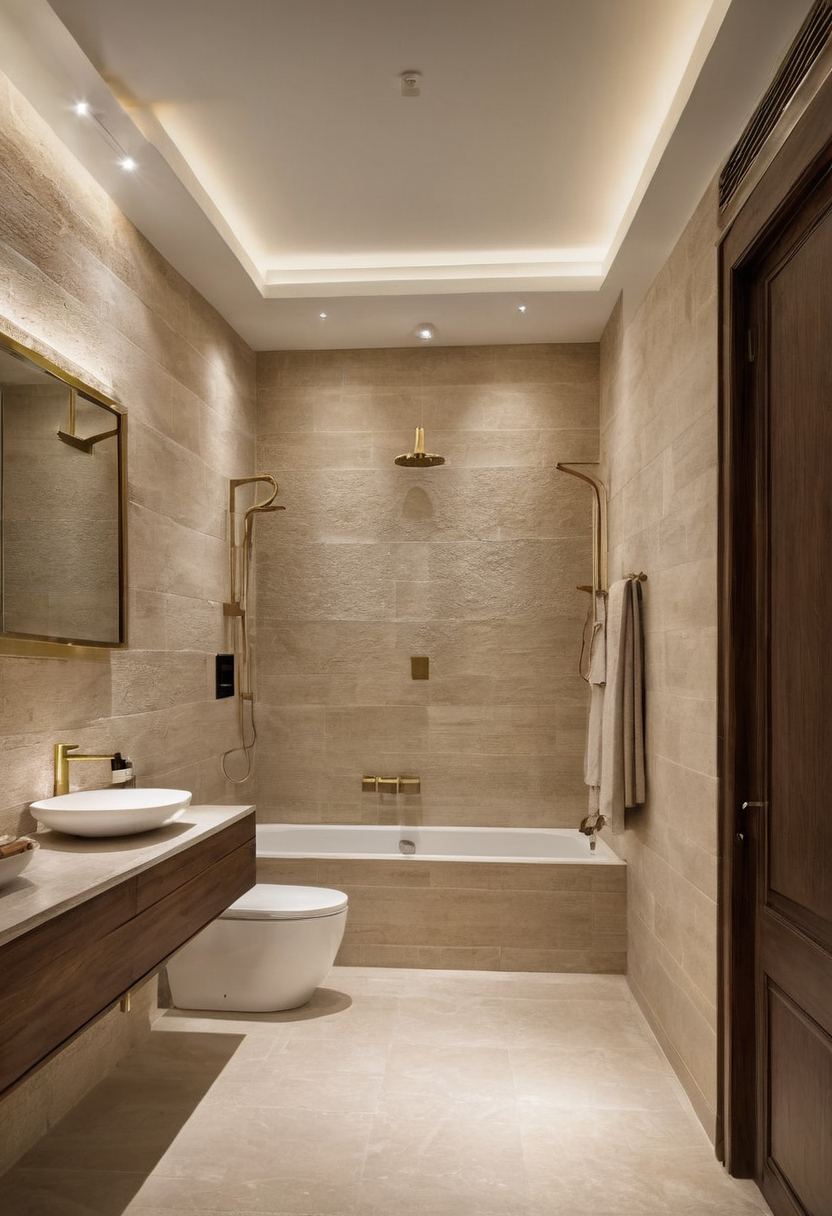
Most Dubai villa variation claims start in the BOQ, specifications, and exclusions schedule shown with finish, fixture, and clearance relationships visible.
Stone is a common dispute point because selection, sealing, cutting waste, book-matching, and care requirements affect price and durability. For natural stone surfaces, the Natural Stone Institute recommends neutral cleaners, stone soap, or mild liquid dishwashing detergent with warm water for care planning, which matters when a villa package includes marble floors, vanity tops, or shower niches. Natural Stone Institute care guidance helps show why the specification should include finish and maintenance assumptions, not only colour.
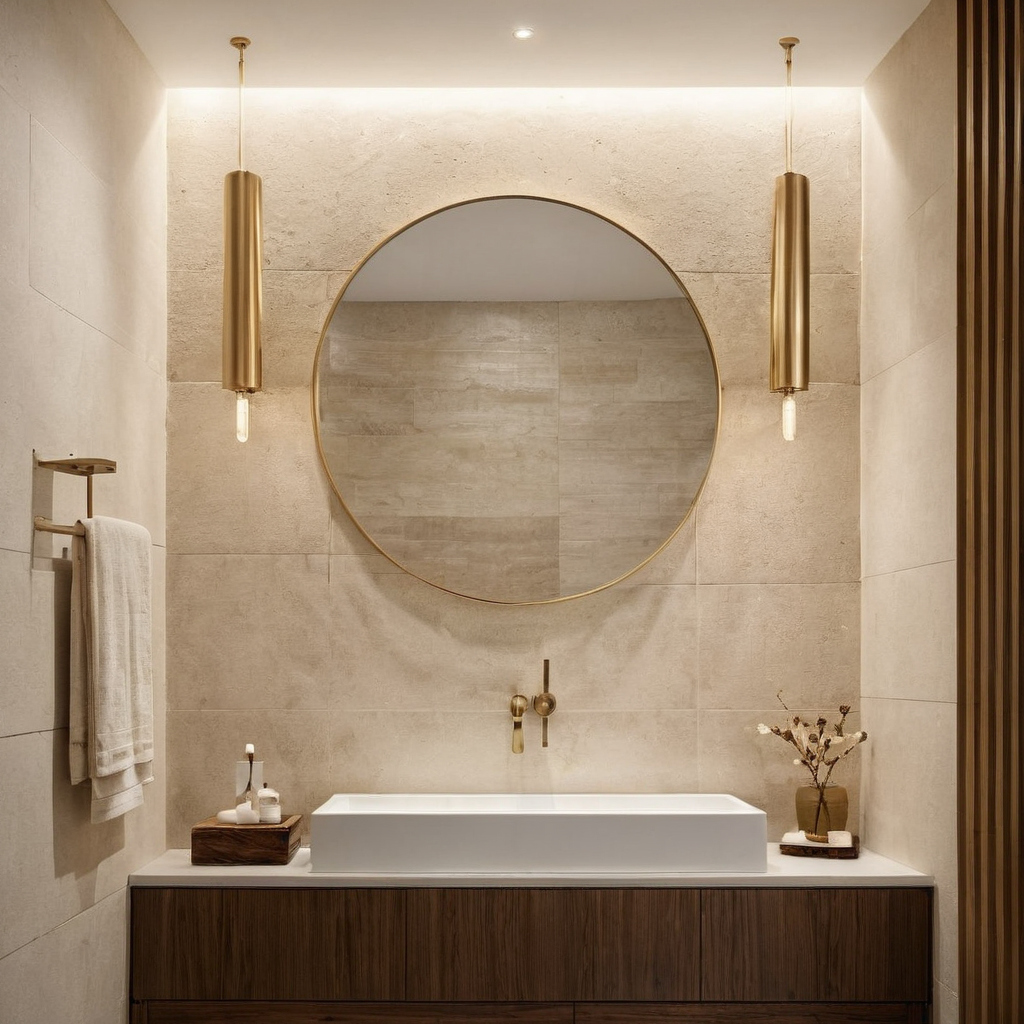
Stone is a common dispute point because selection, sealing, cutting waste, book-matching, and care requirements affect price and durability shown as a planning reference for layout, scale, and material decisions.
Paints, varnishes, waxes, cleaning products, building materials, and furnishings can be indoor sources of volatile organic compounds according to the U.S. Environmental Protection Agency, and the EPA recommends increased ventilation when VOC-emitting products are used indoors. EPA VOC guidance is a useful reminder to specify low-odour or low-emission systems where practical and to plan ventilation during finishing works.
Villa change-control rules should define what counts as a variation before site work starts
Villa change-control wording should separate five causes: client upgrades, design revisions, contractor omissions, hidden site conditions, and authority or community requirements. Without that split, every site surprise can become a variation claim and every owner request can become a delay dispute.
- Written instruction: no variation starts from a message approval alone unless the contract allows that channel and names the approver.
- Revised drawing: the contractor should price from a marked-up plan, elevation, MEP sketch, or joinery detail, not from a vague verbal request.
- Cost and time impact: the variation form should state added cost, omitted cost, procurement effect, programme effect, and VAT treatment where applicable.
- Signature before work: the homeowner, consultant, or appointed project manager should approve the change before the contractor orders material or opens completed work.
Moisture issues deserve special attention in bathrooms, laundries, kitchens, and closed wardrobes. The U.S. Environmental Protection Agency guide to mold and moisture says condensation and wet or damp spots should be fixed promptly to help prevent mold growth, so a BOQ should not treat waterproofing repairs, ventilation defects, or damp substrate correction as decorative extras. EPA moisture guidance supports treating damp areas as technical risk items.
The next cost question is not whether the design fee or contractor quote looks high. The safer question is how that fee compares with the cost of one avoidable design mistake, late substitution, or disputed variation.
Dubai villa renovation cost decisions should compare fees against the cost of design mistakes
For Dubai homeowners, the cost question is not only what an interior designer or fit-out contractor charges. The better question is what risk each appointment removes. Design fees, contractor margins, project management fees, and design-build premiums should be compared with rework, delayed approvals, wrong materials, MEP clashes, and warranty disputes.
How much does an interior designer charge in Dubai for a villa renovation?
Dubai interior designers usually price villa work by fixed design fee, percentage of project value, area-based fee, hourly consultation, procurement margin, or a blend of these methods. The right comparison is not fee format alone. The homeowner should compare the deliverables behind the fee.
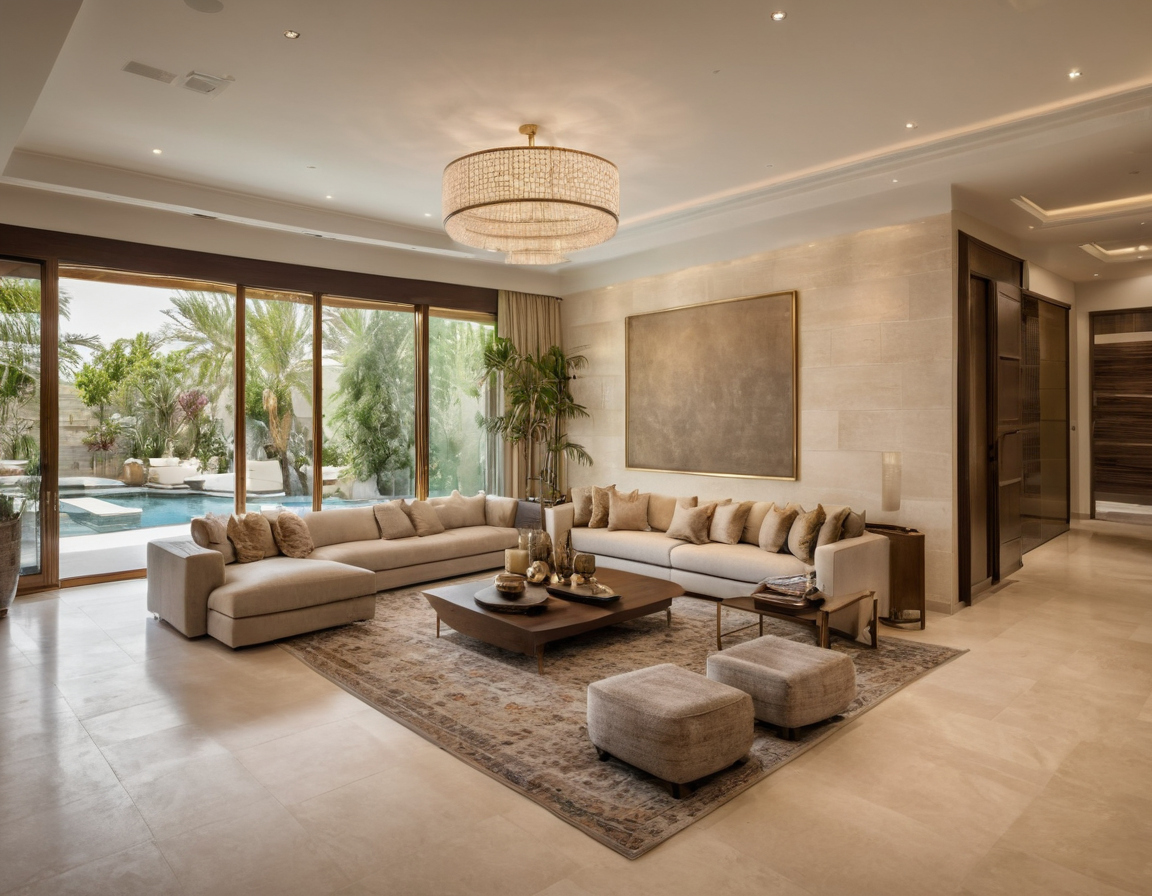
Dubai villa renovation cost decisions should compare fees against the cost of design mistakes shown as a planning reference for layout, scale, and material decisions.
A concept-only package may cover layouts, mood direction, key finishes, and presentation visuals, but exclude authority drawings, MEP coordination, joinery details, procurement, site visits, and contractor responses. A fuller design appointment should include drawing issue stages, material schedules, sanitary and lighting specifications, tender support, site clarification, and sign-off control. The higher fee may be cheaper if it prevents the contractor from pricing assumptions instead of drawings.
How much does villa fit-out or renovation cost in Dubai?
Dubai villa fit-out pricing changes sharply with scope. A cosmetic refresh, such as paint, loose furniture, curtains, and decorative lighting, sits in a different risk category from a renovation that moves bathrooms, changes AC routes, replaces floors, adds built-in joinery, modifies ceilings, or imports stone and specialist finishes.
Contractors may quote as a lump sum, measured BOQ, cost-plus arrangement, or lump sum with provisional sums. A lump sum is only protective when the drawings, specifications, site assumptions, and exclusions are complete. A measured BOQ gives better visibility if quantities are accurate. Cost-plus can suit uncertain site conditions, but it needs open-book purchasing rules, agreed markups, approval thresholds, and reporting discipline.
Villa cost drivers usually sit in joinery, kitchens, bathrooms, stone, glazing, AC changes, lighting control, smart home wiring, waterproofing, imported materials, and site access constraints. A low finish level with heavy MEP work can cost more than a premium-looking room refresh because hidden services decide labour, approvals, and sequencing.
A low Dubai fit-out quote should be checked for missing design, approval, supervision, and warranty costs
A low Dubai fit-out quote often looks attractive because risk has moved from the contractor’s price back to the homeowner. The missing line may be authority coordination, revised drawings, ceiling strengthening, light fitting supply, stone sealing, protection works, night delivery, debris removal, access permits, or post-handover defect visits.
- Ask what drawings were priced: concept visuals, IFC drawings, MEP layouts, joinery shop drawings, or only site notes.
- Ask what is provisional: sanitaryware, tiles, stone, lighting, appliances, hardware, specialist finishes, and authority charges.
- Ask what triggers a variation: client change, site discovery, authority comment, unavailable material, or quantity difference.
- Ask who supervises quality: designer, contractor site engineer, independent project manager, or homeowner.
- Ask who owns defects: contractor, subcontractor, supplier, or a design-build warranty owner.
The safest cost decision is not the lowest fee or the lowest quote. The safer decision is the appointment that makes design, approval, procurement, supervision, and warranty risk visible before signing, which is why the next step is to vet the proposed Dubai villa scope holder before any contract is accepted.
A homeowner should vet the Dubai villa scope holder before signing any design or fit-out contract
Before appointing any Dubai interior design company, fit-out contractor, or design-build team, the homeowner should test capability through documents, not sales language. The strongest evidence is a relevant villa portfolio, complete drawing samples, authority experience, project team names, supplier proof, insurance, programme logic, and clear contract responsibilities.
A relevant Dubai villa portfolio should show technical details, not only finished photographs
A villa portfolio should prove that the company has managed residential constraints, not only styled rooms for photography. Ask for before photos, demolition records, ceiling drawings, lighting layouts, MEP markups, joinery details, stone or tile schedules, site progress photos, and handover images from the same project.
Weak portfolio signals include renders with no completed site, showroom fit-outs presented as villa experience, commercial projects with no residential authority trail, and finished photographs with no drawings behind them. A serious reference call should ask what changed after signing, how variations were priced, who supervised site work, how defects were handled, and whether the final villa matched the approved drawings.
A pre-contract drawing and BOQ review should happen before the homeowner accepts a lump-sum price
A lump-sum villa price is only useful when the drawings and BOQ define the same scope. Before signing, the homeowner should request the trade licence, relevant insurance details, sample contract, drawing list, BOQ, exclusions schedule, payment milestones, procurement schedule, authority approval route, site programme, and warranty terms.
A practical tender clarification schedule should ask who owns each gap: missing reflected ceiling plans, unpriced AC relocation, provisional sanitaryware, unspecified marble thickness, excluded scaffolding, client-supplied lights, joinery hardware allowances, waste removal, community deposits, and defect liability. If the homeowner has a large scope, an independent project manager or quantity surveyor can review the tender before the contractor turns assumptions into variation claims.
The appointment decision should be made with a scope-control scorecard
The final selection should score control, not charm. Give each route a simple low, medium, or high score against design certainty, approval complexity, MEP risk, procurement complexity, budget transparency, speed, warranty accountability, and independent quality control.
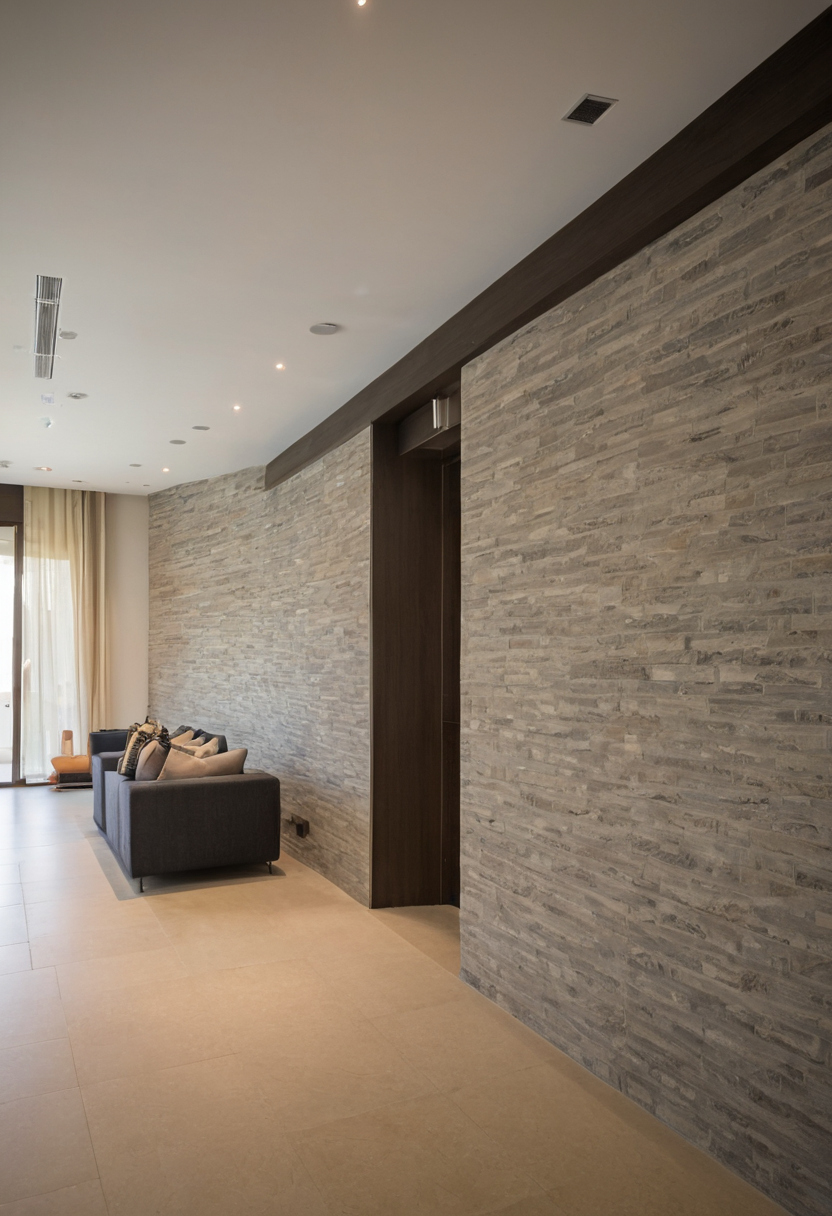
A homeowner should vet the Dubai villa scope holder before signing any design or fit-out contract shown with floor, wall, and fixture relationships visible.
- Cosmetic upgrade: a contractor-led route can work if finishes, quantities, and access rules are clear.
- Full villa refurbishment: a designer-led tender or design-build team is safer when layouts, ceilings, bathrooms, and MEP are still moving.
- Luxury custom joinery project: the scope holder must show shop drawings, hardware schedules, veneer samples, mock-ups, and installation supervision.
- Major technical renovation: the homeowner should prioritise licensed technical coordination, approvals planning, inspection readiness, and warranty accountability over the lowest headline quote.
The changed behaviour is simple: do not sign until drawings, BOQ, approvals path, exclusions, programme, and warranty owner are visible in writing.
FAQ
How much does a fit-out cost in Dubai for a villa renovation?
Villa fit-out cost in Dubai depends on scope more than room count. A cosmetic refresh, full interior refurbishment, MEP-heavy renovation, extension, or luxury joinery package will price differently. The homeowner should compare quotes by drawing reference, BOQ quantity, specification, exclusions, provisional sums, lead time, and warranty owner rather than by headline total only.
How much does an interior designer charge in Dubai for a residential project?
Dubai residential interior designers may charge a fixed design fee, percentage-based fee, area-based fee, hourly consultation fee, procurement margin, or blended structure. The useful comparison is deliverables: concept design only, full technical drawings, tender support, procurement, site supervision, snagging, and warranty support are not the same service.
Is a design-build company safer than hiring a separate interior designer and fit-out contractor?
A design-build company can be safer when the homeowner wants one accountable party for design, coordination, execution, and warranty. A separate designer and contractor can be safer when the homeowner wants independent design control and competitive tendering. The safer route is the one with clearer drawings, approvals responsibility, BOQ detail, variation rules, and warranty ownership.
What should be included in a Dubai villa fit-out BOQ before signing?
A Dubai villa fit-out BOQ should include drawing references, quantities, unit rates, material specifications, installation responsibility, provisional sums, exclusions, alternates, client-supplied items, authority or community cost assumptions, lead times, payment milestones, change-control rules, and warranty responsibilities. Any broad line such as “bathroom renovation” or “joinery works” should be broken into measurable parts before signing.
When does a Dubai villa renovation need authority approval or a community NOC?
A Dubai villa renovation may need authority approval or a community NOC when work affects structure, façade, wet areas, drainage, electrical load, AC systems, external appearance, extensions, access, waste, or community rules. The homeowner should confirm the approval path before demolition, especially in master-planned communities or jurisdictions with specific submission procedures.